
- April 14, 2026
- 15 min read
Most problems with dental treatment abroad do not start because the clinic is abroad. They start because the patient compares the wrong things.
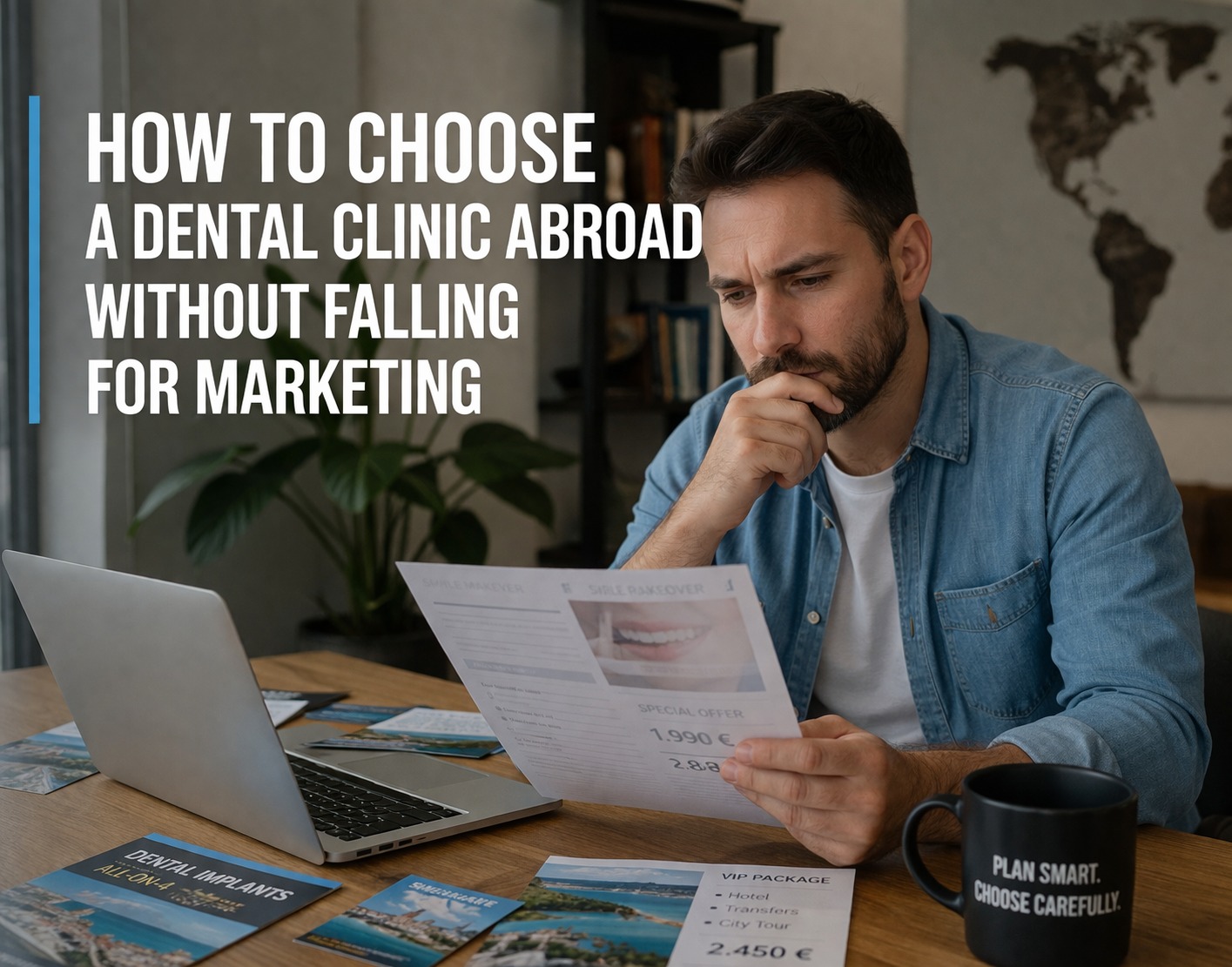
A polished Instagram page, a fast reply, a cheap headline price, a luxury package, or a logo that looks established can make a clinic feel safe long before the important questions have been answered. The real risk begins when the patient is pushed by marketing, rushed into decisions, and never shown what to actually verify before treatment starts.
That is the part many people miss. A logo is not a surgeon. A before-and-after photo is not a treatment plan. A hotel package is not aftercare. And a confident sales message is not the same as a proper case review.
If you are looking at treatment abroad, the goal should not be to find the clinic that markets itself best. The goal should be to find the clinic that can be properly checked, properly understood, and properly trusted before you commit. That is where safer decisions begin.
Why People Get Pulled In by Marketing So Easily
Cheap headline prices hide the real comparison
One of the biggest mistakes people make is comparing the first number they see. A quote can look attractive on the surface and still leave out important parts of the journey: diagnostics, extractions, grafting, temporaries, adjustments, second visits, home follow-up, or remedial work later. A lower price is not a real saving if the treatment path is vague or the aftercare is weak.
Before-and-after photos are persuasive, but they do not show planning quality
Photos can show a final look. They do not show how the decision was made, whether the case was suitable for that route, how much was prepared, how the bite was planned, what materials were used, or how the patient was expected to maintain the work later. Good marketing can make a case look simple when the underlying treatment logic may not have been simple at all.
Fast replies feel reassuring, but speed is not the same as a real assessment
Patients often feel relieved when a clinic replies quickly and sounds confident. But quick communication should never be confused with proper review. If major promises arrive before proper records, proper explanation, and proper discussion of risks, you are looking at sales confidence, not decision quality.
Package language can distract from the real questions
Flights, hotels, transfers, interpreters, and VIP handling can all be useful. But none of them answer the core questions: who is treating you, why this treatment is right for your case, how it will be staged, what can go wrong, and what happens if you have a problem after you go home.
One-size-fits-all plans are one of the biggest dangers
This is where people get caught. They hear the same routes repeated over and over: full-mouth crowns, All-on-4, All-on-6, or other ready-made “solutions” presented too early and too generically. I am not saying these treatments are wrong. I am saying they should never be pushed like standard products before a proper case review shows that they actually make sense for that specific person.
The Real Risks of Choosing the Wrong Clinic Abroad
You may not know who is actually treating you
This is one of the biggest blind spots. Patients often recognize the clinic name, the logo, the salesperson, or the social media page, but they still do not clearly know who the treating dentist or surgeon is, what their qualifications are, how often they perform that exact procedure, or who is responsible if something becomes complicated.
You may be given a treatment direction before a proper assessment
This is where treatment becomes generic. Big treatment decisions should not be built on rushed chat, emotional pressure, or superficial reassurance. They should come after proper records, proper review, medical history, and a clear explanation of why that route fits that case.
You may not understand the full scope of what is being done
Many patients agree to treatment without fully understanding the real scope: how many stages are involved, what is temporary and what is final, whether further work may be needed, what materials are being used, what the healing timeline looks like, or what might need to be adjusted later.
Traceability of materials can become very weak
Another real risk is material traceability. If a patient cannot clearly identify what implant system, restorative material, or components were used, future follow-up becomes harder. This matters because fake or non-compliant products do exist, and because maintenance often depends on knowing exactly what system was placed.
Aftercare, warranty, and accountability are often weaker than patients think
“Contact us if there is a problem” is not a strong aftercare plan. A real aftercare plan should explain who you speak to after treatment, what support is available once you return home, what is included if complications happen, whether return treatment is required, and who pays for extra flights, hotel stays, or corrective work.
Hidden costs can destroy the ‘saving’ later
A treatment can look cheaper until the missing parts appear later: return trips, longer stays, extra procedures, repairs, maintenance, local review, or lost time if something has to be redone. Price alone is a weak way to choose.
Local dentists at home may not want to take over somebody else’s work
This is another real-world problem that many patients do not think about early enough. You should not assume your home dentist automatically becomes the safety net, especially in more complex cases or where the system and materials are unclear.
What to Verify Before Saying Yes to Any Clinic Abroad
Before you commit to any clinic abroad, these are the things I believe you should verify clearly and calmly.
1. Verify the actual treating team
Do not stop at the clinic brand. Ask who is actually treating you, what their role is, what their qualifications are, and whether they are properly regulated in that country.
2. Verify that your case has been reviewed properly
A real recommendation should come after proper records and proper discussion, not just marketing chat. If the route sounds ready-made before real review, slow down.
3. Verify that the treatment plan is written clearly
You should be able to understand what is being done, in what stages, over what timeline, and with what expectations. If the explanation stays vague, that is already a warning.
4. Verify that the clinic can explain why this route fits your case
You do not just want a price. You want reasoning. Why this option, and not another one? Why this amount of treatment? Why this sequence?
5. Verify what materials and systems are being used
Ask for the exact implant brand or restorative material where relevant, and ask for written documentation. A serious clinic should not be vague when you ask clear questions about what is being placed in your mouth.
6. Verify what is included in the quote
Ask for itemized pricing, not just a headline number. You need to know what is included and what is not.
7. Verify how aftercare works after you go home
Who do you contact? What is included? What is not? What happens if you are unhappy? What happens if something fails or needs adjustment later?
8. Verify whether the clinic has a complaints system and clear accountability
This is not negative. It is professional. If something goes wrong, what is the process? Is it documented? Is there a written guarantee?
9. Verify that you can compare and think without pressure
A clinic that is genuinely confident should not need to trap you in speed. If you are not allowed breathing room to review, compare, and think clearly, that is a bad sign.
10. Verify that your home-side reality has been considered
Will you need follow-up? Will your own dentist be willing to see you afterward? Are you prepared for the timeline if a second visit is needed?
Red Flags That Should Make You Stop Immediately
- You are being pushed to book quickly
- The quote sounds too certain too early
- Nobody discusses complications properly
- Aftercare stays vague
- The treating team is unclear
- The clinic sells the destination harder than the treatment logic
- You are shown polished photos but not clear reasoning
- The plan sounds generic and ready-made
- Materials or systems are hard to pin down in writing
- The guarantee sounds strong in marketing but weak in detail
- You are expected to trust the logo more than the evidence
- You feel carried forward before you feel properly informed
“The wrong clinic rarely looks wrong at the beginning. It usually looks polished, responsive, and reassuring. The difference shows later, when details were vague, planning was weak, materials were unclear, or nobody wants to take responsibility once the treatment is already done.”
What a Safer Process Should Look Like Instead
Records first, promises later
A safer process starts with information, not persuasion. Photos, scans, X-rays, medical background, and proper review should come before strong promises and before emotional sales pressure.
Real review before a major recommendation
Major treatment decisions should not feel automatic. A serious route should be explained clearly, with reasons, limits, and alternatives where appropriate.
Clear treatment logic before booking
You should understand not just what is being proposed, but why it is being proposed. If the treatment logic is weak, the whole case is standing on weak ground.
Clear materials, clear stages, clear expectations
A safer clinic does not hide behind vague reassurance or big brands names, or worse, they hide and fake the truth about the real materials they use. It explains what is being used, the country of the origin of the materials and the manufacturer , what is temporary, what is final, what recovery may involve, and what the realistic pathway looks like.
Clear aftercare and clear accountability
This is where the difference becomes real. A safer process makes it clear who supports you after treatment, how complications are handled, and what happens if you need help once you are back home. That is not a bonus. That is part of choosing properly.
Final Thought Before You Book Anything
The clinic that markets itself best is not automatically the clinic that is best for your case.
This is exactly where many people go wrong. They trust presentation before they verify process. They trust speed before they verify planning. They trust the brand before they verify the team. And once treatment starts, those missing details suddenly matter a lot more than the marketing ever did.
If you are considering treatment abroad, do not ask only, “Which clinic looks best?” Ask, “Which clinic can I properly verify? Which route actually fits my case? Which team has been clear with me? Which process still makes sense when the marketing is stripped away?”
That is why Max Dental Holidays exists. Not to act like a clinic. Not to act like a broker. And not to leave the patient alone inside a process they are not in a position to fully control. Max Dental Holidays stands on the patient’s side as a dental treatment manager, making sure the treatment is not just attractive on paper, but properly managed in real life…from planning and coordination to materials, timing, accountability, and follow-through. The point is not to sell a route fast. The point is to make sure the route is right. If you are considering treatment abroad and want the process managed properly from start to finish, begin with Max Dental Holidays.